
Buying frozen octopus, cuttlefish or fish from Mauritania is not like buying from Morocco, Senegal or Spain. You do not simply sign a contract with a processing plant and pay it. Frozen seafood leaves Mauritania through one state channel: the SMCP. If you understand how it works, buying in Mauritania is clear and safe. If you don’t, you can lose weeks, or money.
This guide explains the process step by step, as it works today.
What is the SMCP?
The Société Mauritanienne de Commercialisation de Poissons (SMCP) was founded in 1984. The state owns 70 % of its capital and private companies from the fishing sector own the rest. By law, the SMCP is the exporter of Mauritania’s frozen fishery products, such as cephalopods and demersal fish, and of fishmeal and fish oil.
In 2025, exports handled by the SMCP reached a record: 342,624 tonnes worth 801 million US dollars.
In 2025, decree 2025-133 extended the SMCP’s remit to “all fishery products”, and since then the export of fresh and live fish is also cleared through the SMCP. In early 2026, fresh-fish exporters reported delays and extra fees and asked for a revision. Check the current procedure, timing and fees before every new type of deal.
Who does what
| Party | Role |
|---|---|
| Processing plant | Buys, processes, freezes and stores the goods. Must be approved by ONISPA, the national food-safety authority, and listed by the EU if the goods go to Europe. |
| SMCP | Sets reference prices, runs the sale, signs the contract with the buyer and receives the payment. |
| Mauritanian bank | Receives and confirms the buyer’s letter of credit. |
| Buyer | Defines the specification, makes the offer, opens the letter of credit and organises the import. |
The plant is your real supplier of the goods, but the SMCP is your contract partner and the one you pay.
Step by step
1. Define exactly what you need
Before you talk to anyone, write down:
- Species and presentation: for example whole cleaned octopus, flower shape, land-frozen.
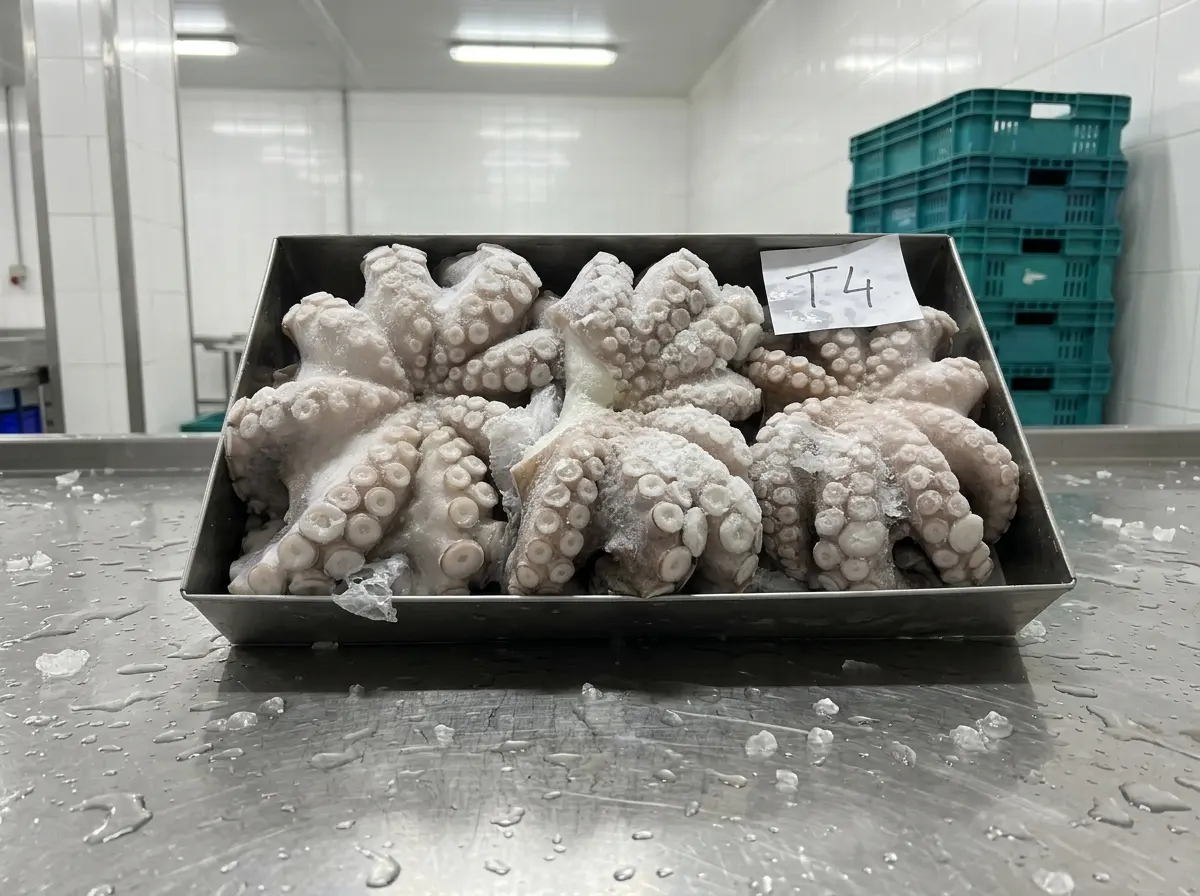
- Grade: octopus is sold by size (T1 over 4 kg down to T8 at 0.3–0.5 kg), cuttlefish and squid by their own grades.
- Glaze and packing: glaze percentage, block or IQF, carton weight, labels.
- Volume and timing: one 40’ reefer holds about 22–25 tonnes of octopus.
- Destination and certificates: EU, Asia and the Gulf each need different approvals.
Remember the closures. Octopus and other cephalopods are closed twice a year, about May to mid-July and from mid-October to about mid-December. The autumn 2026 closure starts on 10 October. The best time to secure goods is often right after the fleet goes back to sea.
2. Choose the right plant
Not every plant is approved for every market. For the EU, the plant must be on the EU list of approved establishments (TRACES). In August 2026, 136 processing plants on land in Nouadhibou and Nouakchott were on that list, plus freezer and factory vessels. Some plants are also approved for other markets, such as Saudi Arabia.
Visit the plant, or have someone you trust visit it. Look at the cold store, the grading tables and the last productions, not only the certificates.
3. Check the price and make your offer
The SMCP publishes reference prices (FOB) for its products. A commission sets them, and a price list stays valid for several weeks. Sales are made in offer rounds: buyers make offers, and the SMCP accepts or refuses them.
Know the reference price for your grade before you negotiate. An offer far below it will not be accepted, and a price far above it is a sign that someone in the chain is taking too much.
4. Sign the contract with the SMCP
The sales contract is signed between you and the SMCP. It fixes the product, grade, quantity, price, packing, shipment period and payment terms. Read the specification carefully. What is written here is what you can claim later.
5. Open the letter of credit
The SMCP asks for an irrevocable, confirmed letter of credit at sight, in favour of the SMCP, at a Mauritanian bank. Talk to your bank early. Many delays come from a letter of credit that does not match the contract or asks for documents that cannot be issued in Mauritania.
The SMCP charges a commission on its sales. Under the 2019 decree it was 1.5 % for frozen products and 0.5 % for frozen small pelagics.
6. Production and quality control
The plant produces and freezes your order. Before loading, someone should check the goods against your contract:
- grade and size distribution, weighed piece by piece on a sample
- glaze and net weight
- packing, labels and carton condition
- cold-store temperature
This is the moment to find problems, not when the container is opened in your port.
7. Loading and documents
The container is loaded and sealed, and a temperature logger goes in. The following documents are issued in Mauritania:
- commercial invoice
- certificate of origin
- health certificate from ONISPA
- EU catch certificate, for goods going to the EU
- packing list
- bill of lading
The bank pays the letter of credit when the documents match.
8. Arrival
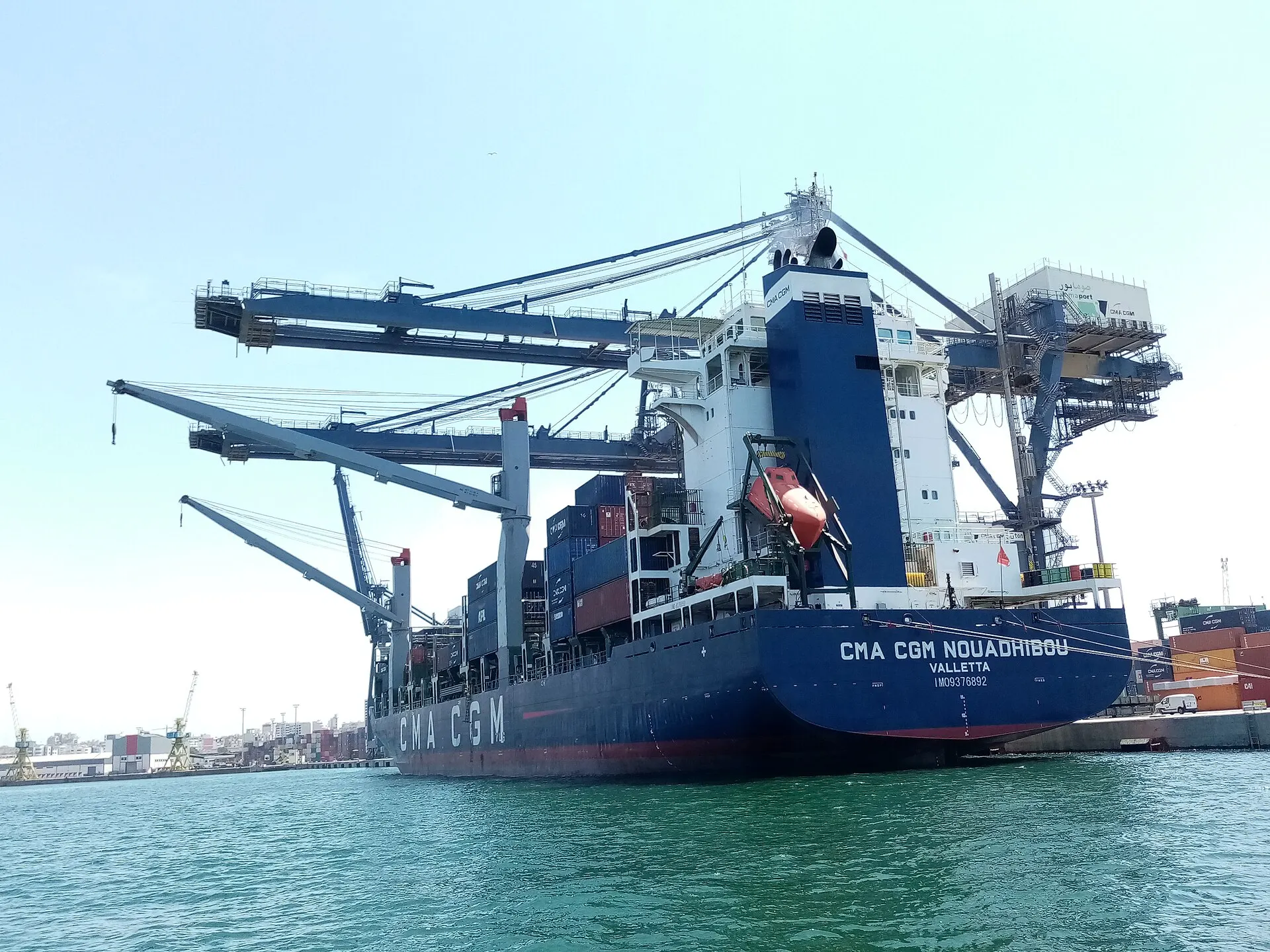
Frozen goods travel in reefer containers from Nouadhibou or Nouakchott. For the EU, the catch certificate is checked on import under the rules against illegal fishing.
Five mistakes new buyers make
- Paying someone other than the SMCP. For frozen export goods, you pay the SMCP through your letter of credit. Be careful with anyone who asks for an advance payment to a private account.
- Believing in “SMCP-registered brokers”. There is no official broker status at the SMCP. Anyone who says otherwise, or asks you to sign an NCNDA before showing anything real, deserves a second look.
- Forgetting the closures. A contract signed in September can be hard to fill in November.
- A vague specification. “Octopus T5–T7” is not enough. Write the glaze, the size tolerance and the packing.
- No inspection before loading. Photos from the seller are not an inspection.
How we help
PROFUNDOR SARL is a Mauritanian company working in Nouadhibou and Nouakchott for importers. We help you choose the right plant, check the specification and the reference price, follow the paperwork with the SMCP and the bank, and inspect your goods before loading. You stay in control of the contract and the payment. We are your eyes on the ground.
Rules and prices change. This guide reflects our understanding in September 2026. Always confirm the current rules with the SMCP before signing.