
Mauritanian octopus is sold by size. On every offer, price list and contract you will see codes from T1 to T8. They look simple, but they are one of the most common reasons for disputes between buyers and sellers. This guide explains what the codes mean and how to use them in your contract.
What the T grades mean
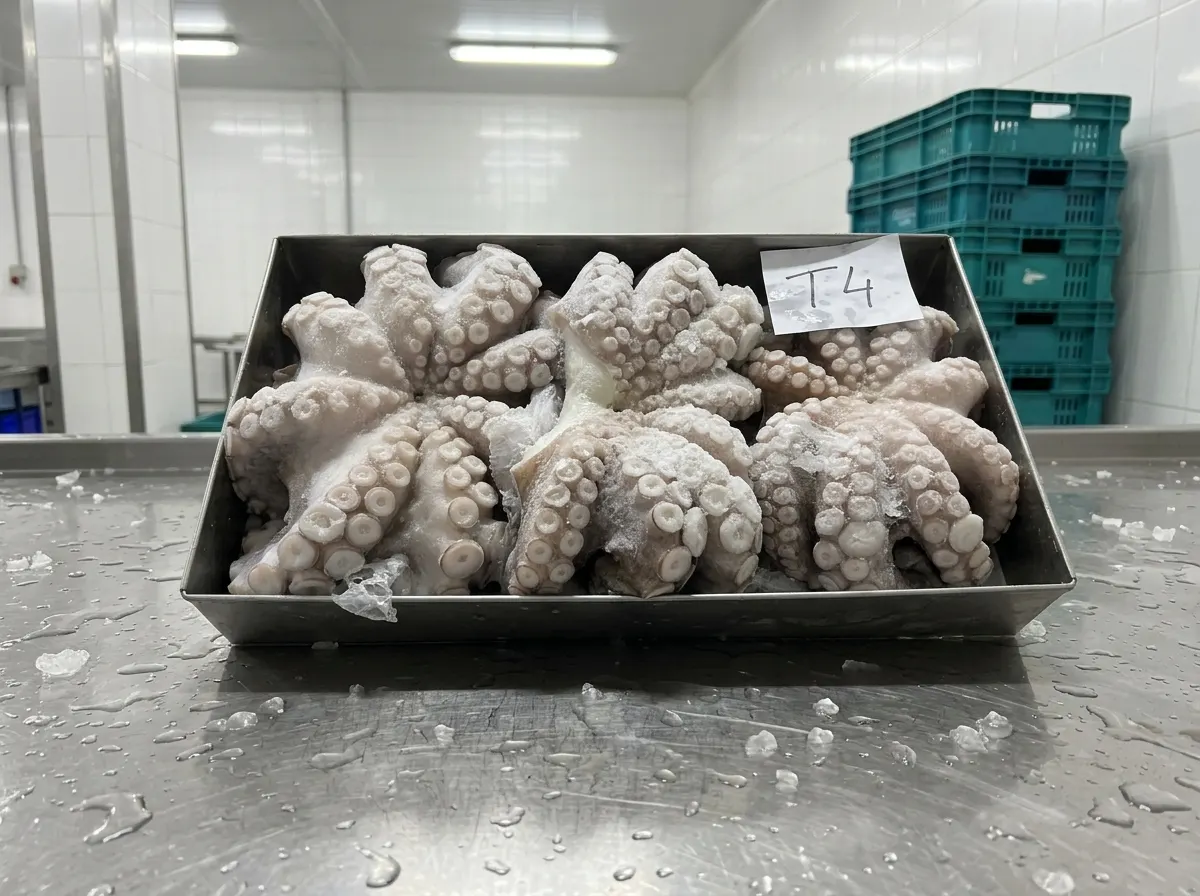
A T grade describes the weight of one piece, net, without the ice glaze. T1 is the largest octopus, T8 the smallest. The SMCP price list uses the codes TAKO 1 to TAKO 8, a reminder of the long history of the Japanese market in Mauritania.
The SMCP does not publish the weight limits of each grade. The table below shows the limits most exporters use.
| Grade | Weight per piece (net) |
|---|---|
| T1 | over 4 kg (some buyers: over 4.5 kg) |
| T2 | 3–4 kg |
| T3 | 2–3 kg |
| T4 | 1.5–2 kg |
| T5 | 1.2–1.5 kg |
| T6 | 0.8–1.2 kg |
| T7 | 0.5–0.8 kg |
| T8 | 0.3–0.5 kg |
Some sellers also offer a T9 of 0.2–0.3 kg. It is not on the SMCP list.
Why the limits are not the same everywhere
Published limits agree for most grades, but not for all. The differences are at T1 (over 4 kg or over 4.5 kg), T5 (from 1 kg or from 1.2 kg) and T6 (up to 1 kg or up to 1.2 kg). A T6 from one seller can therefore contain pieces that another seller would call T5.
Always write the limits in grams in your contract, for example “T6: 800–1,200 g per piece, net weight without glaze”. Do not rely on the code alone.
Three ways the octopus is produced
The SMCP lists Mauritanian octopus in three columns. The production method changes the quality and the price.
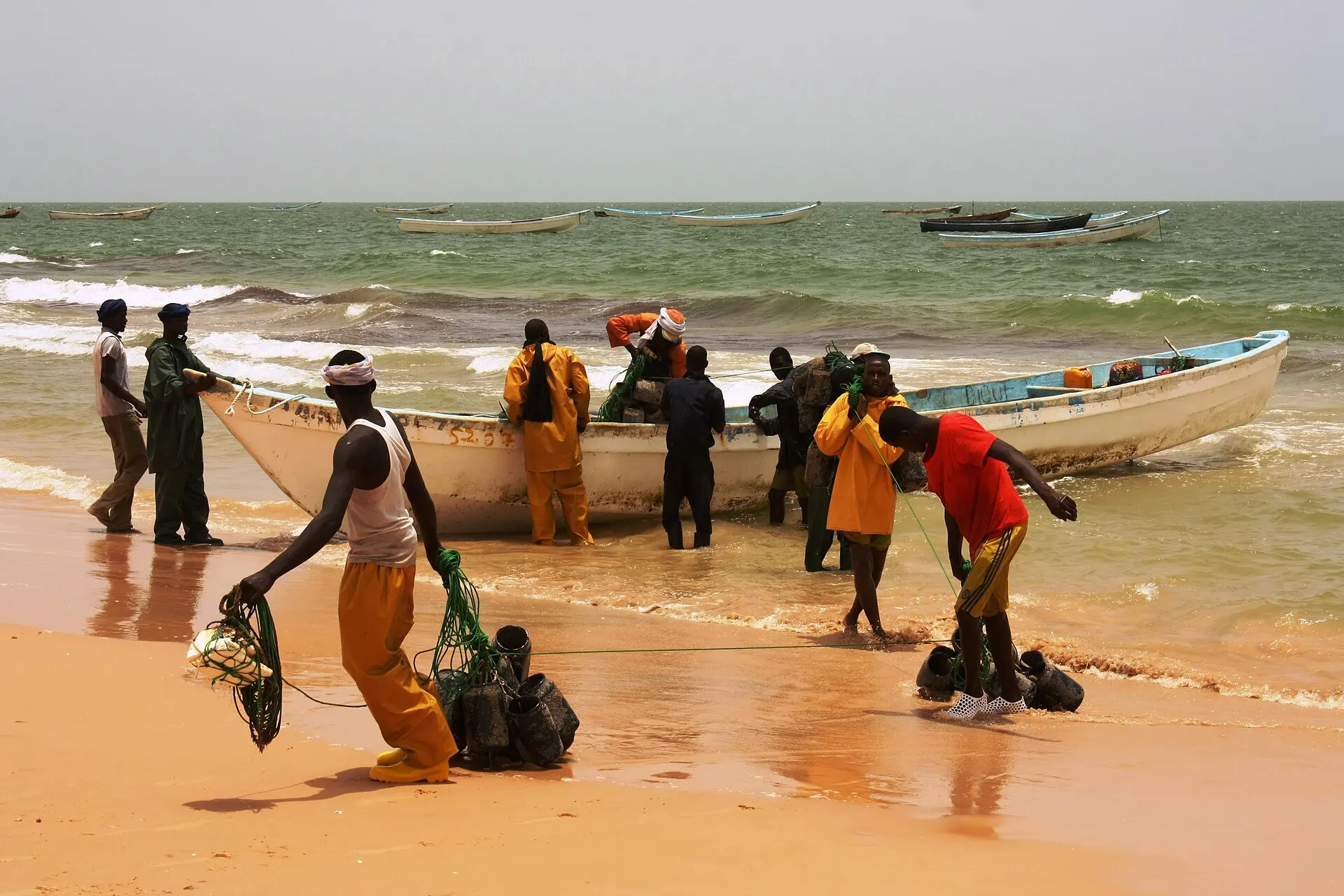
- Land-frozen, pot-caught. Artisanal fishers catch the octopus with pots from pirogues. It is landed alive and frozen in a plant on land. This is the highest price on the list.
- Land-frozen, from ice boats. Coastal vessels keep the catch on ice, and it is frozen on land. The price is in the middle.
- Frozen on board and trap-caught. Freezer trawlers of the cephalopod fleet freeze the catch at sea, together with octopus from traps. This is the lowest price of the three.
Tell your seller which of the three you want. Offers without this information are hard to compare.
PR mixes and tenderised octopus
The price lists also show PR1, PR2, PR3 and PR. Some exporters define them as size mixes, for example PR1 = mix of T1–T4. The SMCP prices do not match that definition: PR1 is cheaper than T5, although a mix of T1–T4 should cost more. PR may therefore mean a second quality, for example octopus with missing arms, graded by size.
Ask the SMCP for the written definition before you buy PR.
Tenderised octopus (poulpe battu, pulpo batido) is sold in two sizes, G (large) and P (small), and only from pot-caught, land-frozen production.
How to write an octopus specification
A good specification leaves nothing to interpretation. It should include:
- Grade in grams, net per piece, with the tolerance you accept outside the range.
- Production method: pot-caught land-frozen, ice boats or frozen on board.
- Presentation: whole cleaned, flower shape, tenderised.
- Glaze: the maximum percentage, and that the net weight is checked after deglazing.
- Freezing and packing: IQF or block, bag, carton weight, labels.
- Volume and shipment period, with the closures in mind.
Before loading, have a sample weighed piece by piece and deglazed. That is the only way to know that the grade in the carton is the grade in the contract.
Limits and definitions come from exporter specifications and the SMCP price lists (September 2026). Always confirm them in writing before you sign.